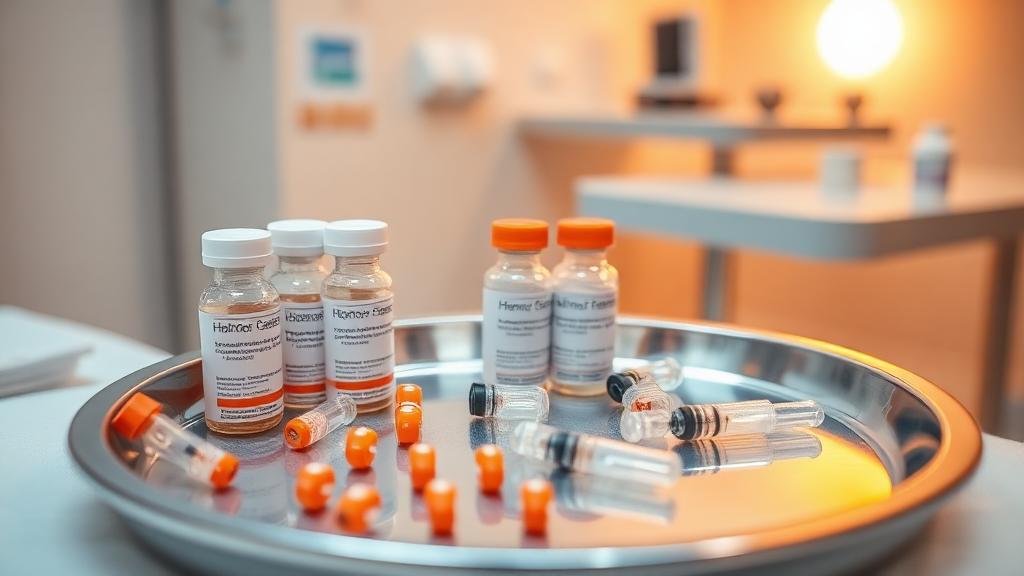


Hormone Optimization
Kure Health tests your hormones in a special way. We look at over 40 hormone markers and their breakdown products. That is way more than the 3 to 5 markers that regular blood tests find. This is part of our Signal-Based Medicine approach. We do not just find out which hormones are out of balance. We find out why they got that way. We connect hormone problems back to what is really driving them. That means your gut health, how your thyroid works, how much stress your body is carrying, what you are exposed to in your environment, and the genes you were born with. This is where the KureBioMap comes in. It shows you the whole picture instead of just isolated numbers floating in space.
You Searched for Hormone Help. Here's Why the Last Doctor Missed It.
Most hormone doctors check testosterone or estrogen, give you a replacement, and send you home. Six months later, you feel better in one area and worse in two others. That's because hormones don't work alone. They're signals in a system. They connect to your gut, your thyroid, your adrenals, your detox pathways, and your genetics. Treating hormones without reading the whole signal map is like adjusting one instrument while the whole orchestra is out of tune.
Why Standard Hormone Testing Misses the Real Problem
Most Los Angeles Members who think they might have a hormone problem visit their doctor and get a basic hormone test. Men get their testosterone checked. Women get their estradiol checked. Both get a thyroid check. If these numbers look normal on the test, the doctor says the hormones are fine. But the symptoms don't go away. The Member gets offered antidepressants, sleep pills, or told to exercise more.
Standard hormone testing fails for three reasons. First, it tests too few things. Total testosterone without the free version and estradiol misses what your body can actually use. Thyroid testing that stops at the pituitary signal misses whether your body is converting the hormone the right way and whether your immune system is attacking the gland itself. Estradiol without progesterone and cortisol rhythm misses the relative imbalances that drive symptoms.
Second, standard testing relies on broad reference ranges that confuse what is common with what is healthy. Your testosterone or thyroid levels can sit comfortably inside the standard normal range, yet still be the exact reason you feel completely exhausted or flat. When you only look at statistical averages, you might be told everything is fine simply because you cleared a generic baseline. But a laboratory cutoff doesn't know you, and it has nothing to do with how you actually feel and function.
Third, standard testing takes just one picture. Hormones change throughout the day, the menstrual cycle, and when you are stressed, tired, or eating. One morning blood test cannot show the cortisol rhythm, the luteal phase progesterone, or the daily testosterone pattern. The testing we use at Kure Health measures hormone production, metabolism, and clearance over time. This gives Los Angeles Members the detail they need for accurate diagnosis. Think of it like checking your home's temperature at 8 a.m. and thinking that is how warm it stays all day. You would miss the afternoon heat, the evening cool, and all the work your thermostat does. Hormones work the same way. We track them across your day and cycle, not just once.

Keep reading: PCOS Is Not Just a Fertility Problem: The Full-Body Hormone Disruption
The DUTCH Test: Complete Hormone Assessment
A hormone test that checks urine samples over time is the best way to understand what your hormones are really doing. It is a main part of KureBioMap for Los Angeles members who have hormone problems. A single blood test shows what is in your blood right now. It is like taking one photo of traffic at one intersection at 2 PM. That one photo might look fine even if rush hour is bad every single day. A urine test over time shows you everything. It shows how your body makes hormones, what it does with them after they are made, and how it gets rid of them when it is done. That is the difference between one photo and a whole week of traffic cameras.
The test checks over 40 hormone markers. It looks at estrogen and how your body breaks it down. This shows if estrogen is being processed safely or in ways that could cause harm. It checks progesterone to confirm you ovulated and made enough during the second half of your cycle. It measures testosterone and how your body converts it. This shows not just how much testosterone you have but what your body is turning it into. Sometimes your body converts too much testosterone into estrogen, and the test can catch that.
Your cortisol test shows your body's full daily pattern. It checks your cortisol when you wake up, at midday, in the afternoon, and at night. This tells us if your cortisol curve is healthy, flat from long-term stress, or flipped upside down. Each pattern needs a different treatment. Your melatonin metabolites show how well your body makes sleep hormone. Your organic acid markers show how your brain chemicals are working and how your body is using certain nutrients.
For Los Angeles Members with fatigue, weight gain, mood changes, low libido, sleep problems, or brain fog, a detailed hormone check often finds the exact hormone problem causing symptoms that regular blood tests said were normal. The results help doctors create a plan just for you. That plan uses bioidentical hormones, targeted supplements, and lifestyle changes based on how your body works.

Bioidentical Hormone Optimization Protocols
Kure Health uses bioidentical hormones. These are molecules that look and work exactly like the hormones your body makes on its own. Synthetic hormones are different. They have changed shapes that make your body react in different ways and cause different side effects. Bioidentical hormones fit into your body's receptor sites the same way your natural hormones do.
For Los Angeles men with low testosterone, the first step is a full check-up using KureBioMap and hormone tests. These tests show not just that testosterone is low, but why it dropped. Insulin resistance can turn testosterone into estrogen. Chronic stress stops the Signal that tells your body to make testosterone. Poor sleep breaks the time at night when your body naturally makes testosterone. Gut inflammation releases a protein that grabs testosterone and traps it, so your cells cannot use it. Treatment fixes these root causes and raises testosterone. Your doctor picks the best way to give you testosterone: a patch on your skin, a shot, or a pellet under your skin. Blood tests guide how much you need.
For Los Angeles women going through perimenopause, menopause, or hormonal changes before menopause, this plan looks at progesterone, estradiol, testosterone, and the hormones your body makes on its own. We test your hormones in detail first. Bioidentical progesterone is often the strongest help for women in perimenopause. It brings back good sleep, cuts down worry, and balances progesterone and estrogen the right way. Estradiol is given when estrogen is dropping and you feel symptoms. Testosterone helps when you lose interest in sex, feel tired, or lose muscle.
Every protocol is checked with repeat tests every 3 to 6 months. The dosing gets adjusted based on real data, not on guessing about how you feel. The goal is not a number on a lab report. The goal is to make your symptoms go away and get your body working well again.

Keep reading: IV Therapy: Medical Treatment or Wellness Trend? What the Science Actually Says
Hormone Optimization for Men and Women
Hormonal problems happen to men and women. But they show up in different ways. Men and women need different kinds of tests to find out what is wrong. Los Angeles men and women both deserve full hormone checks. Most doctors in Los Angeles County only do quick, short tests instead.
For men, the main problems are testosterone going down, the body turning testosterone into estrogen, the thyroid not working right, and cortisol getting out of balance. Symptoms include feeling tired, losing motivation, lower sex drive, trouble with erections, hard time building muscle, extra belly fat, fuzzy thinking, getting angry easily, and bad sleep. Men are getting these symptoms younger now. Men in their 30s have hormone patterns that used to show up in men in their 50s. Estrogen from the environment, constant stress, body systems not working well, and not enough sleep are making the decline happen faster.
For women, hormones get more complicated across their whole life. Before menopause, women can have too much estrogen, too much androgen from ovaries that do not work right, and not enough progesterone. Around menopause, women go through 8 to 10 years of hormones that go up and down and then drop. Doctors call this normal aging. After menopause, women lose bone faster, their heart gets more at risk, their thinking gets worse, and their life feels harder. Hormone optimization can help with these problems.
At Kure Health in Los Angeles, Members get care that matches their own hormonal phase, sex, age, and symptoms. KureBioMap combined with detailed hormone tests gives doctors the exact information they need. This means Members can move past the same treatment for everyone. Instead, each Member gets a plan made just for them.
Serving Los Angeles: Your Hormone Doctor in Los Angeles County
Kure Health helps people in Los Angeles who have tried everything else. Maybe your doctor said your hormones are fine, but you still feel awful. Or maybe you are taking hormones but they are not working the way you hoped. Signal-Based Medicine looks deeper to find the real answers and help you feel better.
Our Downtown Los Angeles center is open for in-person visits. Los Angeles residents can also use telehealth to get the same care from home. We mail a hormone measurement kit to your house, and you complete it when it works for you. Blood work for KureBioMap can be drawn at partner labs around Los Angeles County. We talk about your results over video with the same care we give in person.
For Los Angeles Members already taking hormone medicine from another doctor, Kure Health can do a full check-up using KureBioMap and tests that show how your body is handling those hormones. Many Members on testosterone, estrogen, or thyroid medicine find out that their dose is too high or too low, that their body is not processing the hormones the right way, or that nobody ever figured out why their hormones dropped in the first place. When you fix the dose and find what caused the problem, you get better results than just taking hormone medicine alone.
Los Angeles residents who want to do more than basic hormone tests can call (888) 949-KURE for a full hormone check. KureBioMap finds what regular tests miss. A detailed look at what your body breaks down shows things blood tests cannot see. Signal-Based Medicine connects things that other doctors treat one at a time.
About the author
Kenton Gray is the Founder and Chief Executive Officer of Kure Health. He writes here as an operator, not a clinician.