
Signal-Based Medicine
Your genes are not a diagnosis. They are a blueprint.
Functional genomics reads the pathways that determine how your body converts nutrients, clears toxins, processes hormones, responds to stress, and repairs cells. Kure places that blueprint beside your current clinical signals so decisions are precise, not guessed.

Clinically reviewed by Dr. Peter F. Demitry, MD
Chief Medical Officer, Kure Health · 2026-09-22
The problem with single answers
Most tests answer one question. Your biology answers to many.
A blood panel shows what is happening now. An ancestry test shows inherited variants without clinical interpretation. A wearable shows real-time signals. None of them, alone, explains why your body responds the way it does.
Functional genomics adds the architectural layer: the permanent instructions that influence how you convert sunlight into usable vitamin D, how you metabolize fat and carbohydrate, how quickly neurotransmitters clear, and how your cells repair damage.
The value is not more data. It is the right data, interpreted together.
Three layers. One complete picture.
Inherited architecture. Changing expression. Current signals.
Each layer answers a different question. Kure uses all three so recommendations are matched to the actual patient, not the average patient.
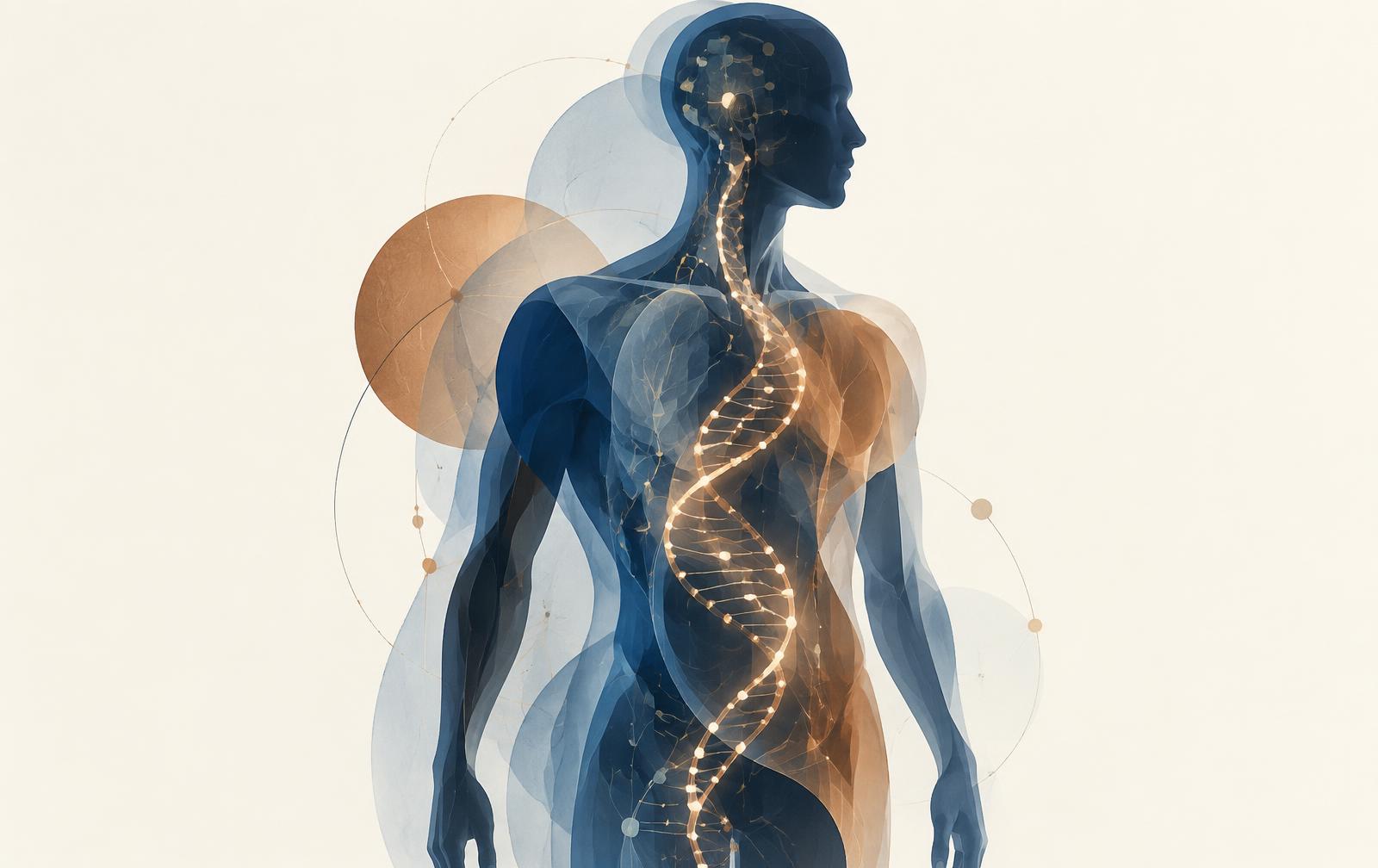
Inherited Architecture
Your DNA blueprint
Genetic variants describe the factory specs: how your enzymes convert nutrients, how receptors respond, how fast neurotransmitters clear, and where inherited vulnerabilities may appear. This layer is stable—you generally only need to read it once.
Changing Expression
DNA methylation & regulation
Methylation patterns reflect longer-term biological context: age, environment, stress, nutrition, and behavior. They add a dynamic layer but are not a real-time dashboard and cannot prove a single cause.
Current Clinical Signals
Symptoms, labs, history, wearables
The most important question is what needs attention now. Current clinical data determine whether a genomic finding is relevant, needs confirmation, or may not change care.
Biological Pathways
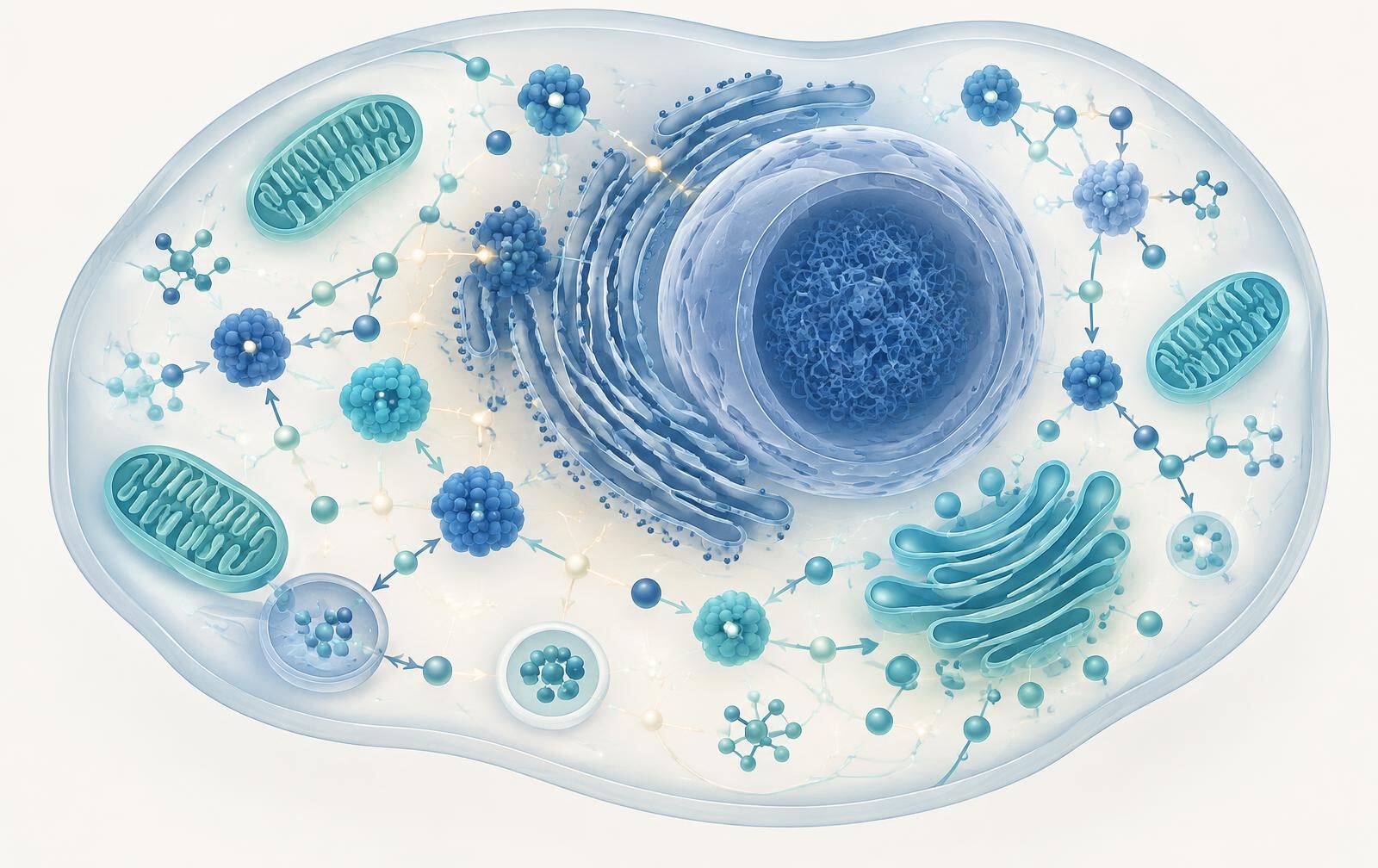
What functional genomics actually reads
These are not abstract labels. Each pathway corresponds to real functions you experience every day: energy, sleep, weight, mood, hormone cycles, inflammation, and how you respond to medications and supplements.
A pathway finding only matters when it is interpreted with your symptoms, current labs, and history. Kure does not treat every variant as actionable; we treat the complete picture.
CYP2R1 · VDBP · VDR
Vitamin D Conversion, Transport & Receptor Function
Why a normal blood D level may still mean cellular deficiency.
Analogy: Blood level is the amount of fuel in the tank; the cascade tells you whether the engine can actually burn it.
Why it matters: A standard test measures circulating vitamin D. It does not measure conversion efficiency, transport capacity, or whether the cell receptor can take it up. Any step can fail while the blood result looks acceptable.
How Kure uses it: AgeCode and clinical review help identify which step matters for you, so supplementation strategy can be matched to the actual bottleneck rather than guessed from blood level alone.
APOA2 · TCF7L2
Dietary Fat & Carbohydrate Response
Why one macronutrient ratio does not fit every body.
Analogy: A fuel map shows how efficiently your body turns different foods into usable energy.
Why it matters: Some people are genetically wired to process fat efficiently; others convert excess fat into glucose and insulin load. Some people tolerate carbohydrate well; others experience stronger post-meal glucose responses. Genes do not act alone—APOA2 and TCF7L2 interact, which is why population diet advice often fails.
How Kure uses it: Functional genomics reveals your likely fuel-efficiency profile so nutrition planning can start from your biology instead of a trending diet.
5-HTTLPR
Sleep & Stimulus Filtering
Why some people cannot stay asleep even when they fall asleep easily.
Analogy: Sleep is half falling asleep and half staying asleep under sensory "noise." A short receptor is like a thinner wall between you and the environment.
Why it matters: Some sleep struggles are not sedation problems; they are filtering problems. If the brain does not genetically dampen environmental signals, the same bedroom that feels silent to someone else feels noisy.
How Kure uses it: Knowing the mechanism changes the protocol—from sedatives to environment, nervous-system support, and receptor-support strategies.
UCP1 · MC4R · FTO
Weight Regulation Mechanisms
Three different biological reasons calorie advice falls short.
Analogy: Weight regulation has multiple levers: furnace setting, fullness signal timing, and taste/texture satisfaction.
Why it matters: UCP1 affects thermoregulation and meal-frequency needs. MC4R affects palate satisfaction and flavor variety. FTO affects how fast the gut-to-brain fullness signal travels. Any of these can make standard restriction ineffective or counterproductive.
How Kure uses it: Identifying the active mechanism lets the protocol target the lever that is actually broken instead of blaming willpower.
CYP19A1 · CYP1B1 · CYP1A1 · CYP3A4 · COMT
Estrogen Production, Conversion & Clearance
Why hormone balance depends on production, metabolism, and detox at the same time.
Analogy: Hormone balance is a river: how much water enters, which tributaries it takes, and how fast it drains.
Why it matters: High aromatase activity produces more estrogen. Phase-I enzymes route estrogen toward protective or inflammatory metabolites. Phase-II methylation and Phase-III gut clearance remove what the body no longer needs. A problem at any stage can produce symptoms or risk that blood hormone levels alone miss.
How Kure uses it: The full cascade is reviewed with symptoms, cycle history, conventional labs, and gut health so interventions support the right step.
MTHFR · GSTM1 · GSTT1
Detoxification & Methylation Capacity
Why some people accumulate toxins, hormones, and inflammatory metabolites faster than others.
Analogy: Detox pathways are the drains and filters of the body. A slow drain does not change the tap; it changes how quickly the sink overflows.
Why it matters: MTHFR governs the methylation cycle used for DNA repair, neurotransmitter synthesis, and toxin clearance. Glutathione-S-transferase genes handle environmental and gut-derived toxins. Variants can slow clearance without obvious symptoms until load exceeds capacity.
How Kure uses it: Methylation and detox support are tailored to the specific bottleneck, with confirmation from standard labs such as homocysteine when indicated.
COMT · MAO-A · BDNF
Neurochemical Clearance & Stress Resilience
Why the same stressor lands differently in different brains.
Analogy: Neurotransmitters are like sound waves; clearance genes control how fast the room returns to silence.
Why it matters: Slow clearance can amplify focus, creativity, and emotional depth—but also anxiety, rumination, or burnout under chronic stress. BDNF affects neuroplasticity and recovery from high-stimulus events. These variants are not defects; they are traits that need matching conditions.
How Kure uses it: Kure uses this data to personalize nervous-system support, nutrient cofactors, and stress-recovery protocols rather than defaulting to one-size-fits-all recommendations.
CYP2D6 · CYP2C19 · CYP3A4
Medication & Supplement Metabolism
Why the same dose can be too much, too little, or the wrong route.
Analogy: Cytochrome P450 enzymes are the body's quality-control checkpoints for what gets processed and how fast.
Why it matters: Variants in these enzymes change how quickly common medications and supplements are broken down. A standard dose can be ineffective for one person and excessive for another. Grapefruit, St. John's wort, and other common exposures can also inhibit or induce these pathways.
How Kure uses it: Findings are shared with prescribing clinicians so dosing can be adjusted responsibly; Kure does not direct medication changes from a report alone.
FOXO3 · APOE
Longevity & Cellular Repair Signaling
Why some interventions help repair while others can overload sensitive systems.
Analogy: Cellular repair genes are the maintenance crew. Their efficiency is shaped by both genetics and whether the environment calls them to work.
Why it matters: FOXO3 variants influence how cells respond to high-dose NAD+ and other longevity interventions. APOE4 is the most studied Alzheimer's-risk variant, but risk is heavily modified by gut-derived inflammation, vascular health, and lifestyle.
How Kure uses it: We match the intervention and delivery route to the genetic profile, then track response with KureSync and repeat testing instead of assuming benefit.
Order of Operations
Sequence matters more than intensity.
The most expensive intervention will underperform if the body is still fighting an active fire. Kure follows a clear sequence.
Put out the acute fire
Address active infections, unmanaged symptoms, severe inflammation, or instability first. Advanced interventions layered onto an unstable system rarely produce the expected result.
Optimize the terrain
Repair the gut wall, regulate the nervous system, reduce toxic burden, and match nutrition to genetic capacity. This is where most chronic conditions turn around.
Pursue optimization & longevity
Once the system is stable and resilient, targeted peptides, NAD+ protocols, hormone optimization, and advanced interventions have the best chance to work—and can be tracked with repeat testing.
Responsible interpretation
What functional genomics cannot do
- Functional genomics cannot diagnose a disease or predict a guaranteed outcome.
- It does not replace evaluation by a qualified physician, standard laboratory testing, imaging, or specialist care.
- Findings should not be used to start, stop, or change medications or supplements without clinician oversight.
- Genetic predisposition is not destiny; environment, behavior, and chance still shape outcomes.
- No single test is the whole patient. Genomics is one signal among many.

From report to care
The report is the beginning of a clinical conversation.
A raw genetic file is like a map without a navigator. Every finding at Kure is reviewed in the context of your history, symptoms, current labs, medications, and other diagnostics.
The goal is not the longest supplement list. It is identifying the priorities that deserve attention, the findings that need confirmation, and the items that may not change care at all.
Baseline → Interpret → Act → Re-measure
That loop is how functional genomics becomes useful. Without re-measurement, even the best interpretation is just an educated guess.
Common questions