Foods and herbs studied against parasites
8 min read · Updated September 21, 2026
The short answer
Foods and botanicals with documented laboratory anti-parasitic activity include pumpkin seeds, papaya seeds, garlic, raw onion, clove, oregano, wormwood, black walnut hull, neem and pineapple bromelain. Laboratory activity is not the same as a clinical cure, so treat these as dietary and terrain support rather than as treatment for a diagnosed infection.
The kitchen list
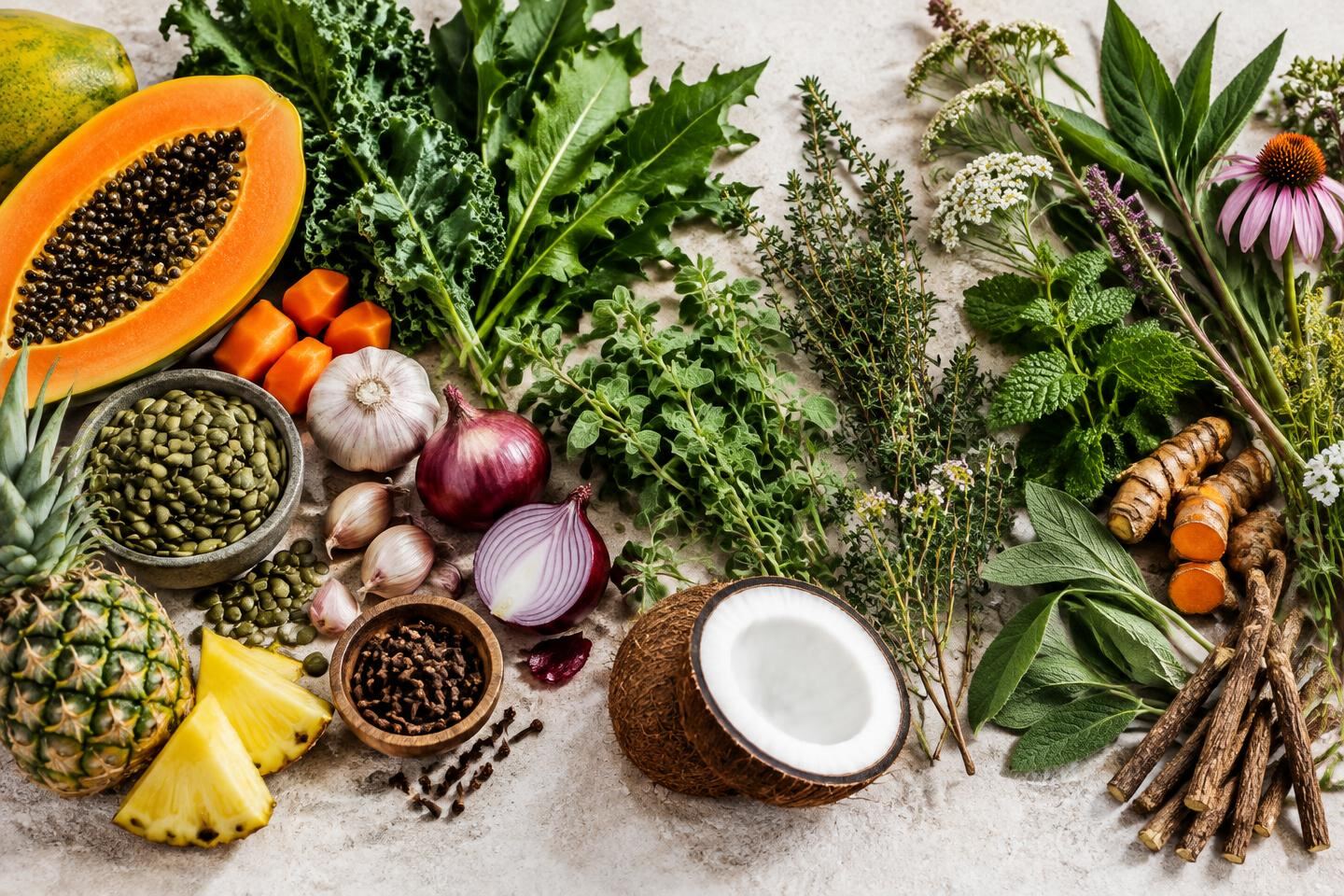
These are ordinary foods with published anti-parasitic research behind them. They are safe for most people to eat generously, which makes them a sensible place to start.
- Pumpkin seeds — cucurbitacin has been studied for its paralysing effect on intestinal worms; traditionally eaten raw and ground, a generous handful daily.
- Papaya seeds — the most studied food in this category, with small human trials on intestinal parasite clearance; intensely peppery, usually blended into something.
- Garlic and raw onion — allicin and related sulphur compounds show broad antimicrobial activity in the laboratory; crush and rest for ten minutes before eating.
- Pineapple and papaya flesh — bromelain and papain are protein-digesting enzymes that support digestion during a protocol.
- Coconut, including oil and fresh flesh — medium-chain fatty acids with documented antimicrobial activity.
- Clove, oregano, thyme and cinnamon — culinary spices with strong laboratory activity; easy to use daily at food doses.
- Carrot, beetroot and bitter greens — fibre and bitter compounds that support motility and bile flow, which is the unglamorous half of the job.
The botanical list
These are stronger, used at therapeutic rather than culinary doses, and belong in a time-boxed protocol rather than a daily habit.
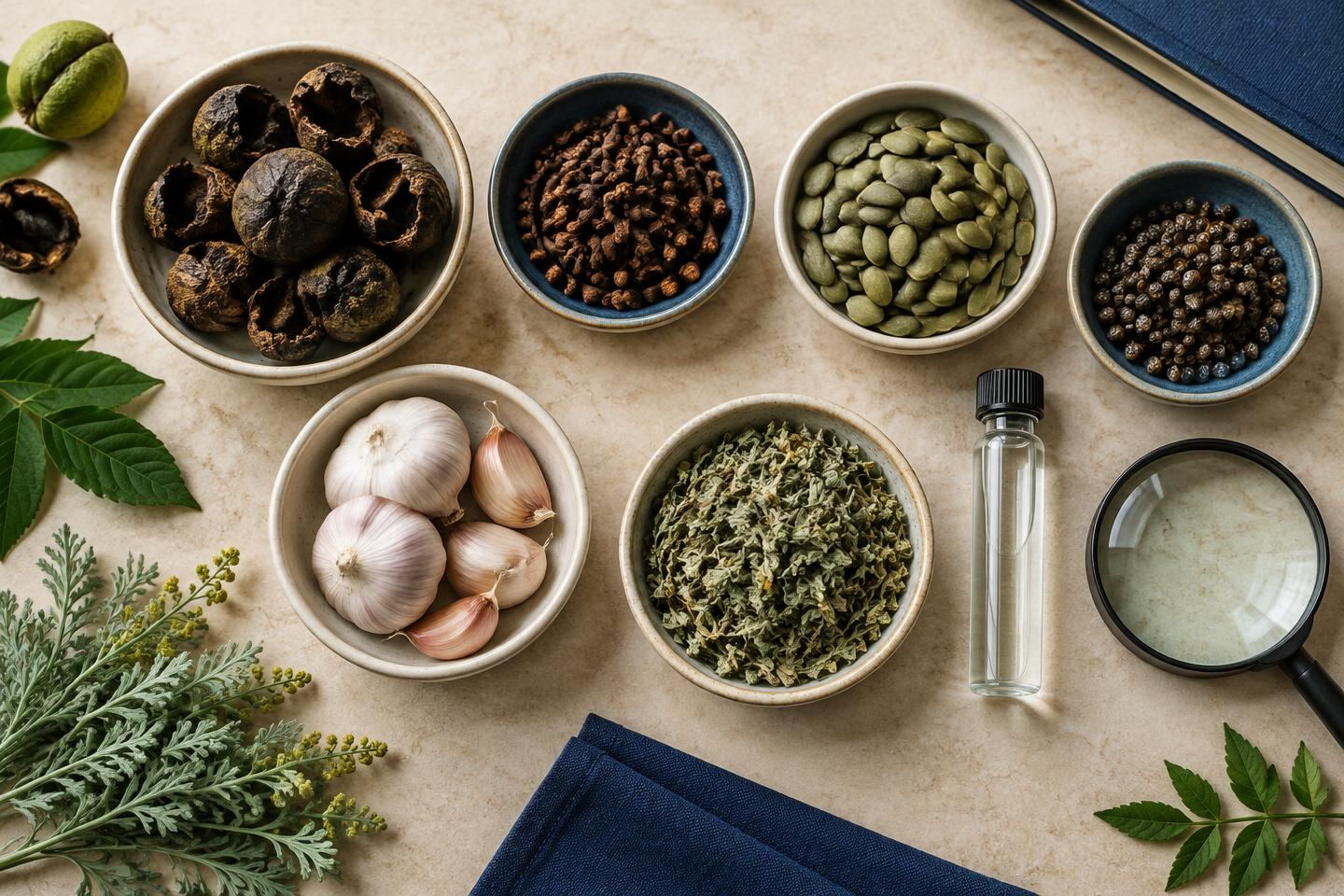
Wormwood (Artemisia absinthium) is the classic bitter, with well-documented traditional use and real research interest — and a clear ceiling on duration, because prolonged high-dose use is not benign. Black walnut hull supplies juglone and tannins. Neem is used across Ayurvedic practice for the same purpose. Berberine-containing plants such as goldenseal and barberry have broad antimicrobial data. Clove oil is often paired with wormwood on the reasoning that it addresses different life stages.
These are also the plants with the real contraindication lists: pregnancy, breastfeeding, children, seizure disorders, liver disease, and several medication classes. Potency and caution travel together.
How to use the list sensibly
Foods: eat them daily, for months, without ceremony. Pumpkin seeds on breakfast, garlic in dinner, oregano on everything, papaya seeds blended in if you can tolerate the taste. This is terrain work — low risk, slow, cumulative.
Botanicals: use them in a structured protocol, after a drainage phase, with digestive and filtration support alongside, for a defined number of days, then stop. Repeat in cycles if your plan calls for it rather than running them continuously.
What ties the two together is the same principle as everything else here: the exit route has to be open first. Sugar and alcohol down, water and fibre up, bowels daily.
This article is general wellness education. It is not medical advice, and the products discussed are not intended to diagnose, treat, cure or prevent any disease.
Before you start anything here
Read the safety guide, and have your provider review your medication list. Pregnancy, breastfeeding, kidney or liver disease, bleeding disorders and several medication classes all change what is appropriate.
Herbal use & safetyQuestions people ask about this
Measured, not guessed
How we know whether a routine is working
Most of this category asks you to judge a cleanse by how you felt on day four. We do it the other way round. Kure reads the systems these routines support before you start and again after you finish, so the answer comes from your own data instead of a testimonial.
Diagnostics describe patterns in your own data. They are not a diagnosis, and Kure Essentials products are not intended to diagnose, treat, cure or prevent any disease.
Who wrote this
Jocelyne · Herbalist, Kure Essentials family
Jocelyne formulates the herbal blends in the Kure Essentials family. Her work comes out of a family tradition of plant medicine, decades of hands-on practice with clients, and a hard line on sourcing: whole herb, no fillers, nothing she would not give her own family.
- Herbal formulation
- Traditional preparation
- Sourcing and testing
Reviewed by Kure Clinical Team
Our clinicians and health coaches review every Kure Essentials guide against the same standards we use inside patient care: what the evidence supports, what it does not, and what we would actually tell a patient sitting in front of us.
How Kure reviews contentThe matching sequence
Parasite & Terrain Reset
A time-boxed botanical protocol with the digestive and filtration support that should always accompany it.
See the package