The part the cleanse industry leaves out
Written the way we would explain it in the clinic: what the mechanism actually is, what the evidence does and does not support, how to sequence it, and when to stop and get help. No miracle framing, no invented urgency.
8 min read
Drainage before detox: the two weeks nobody sells you
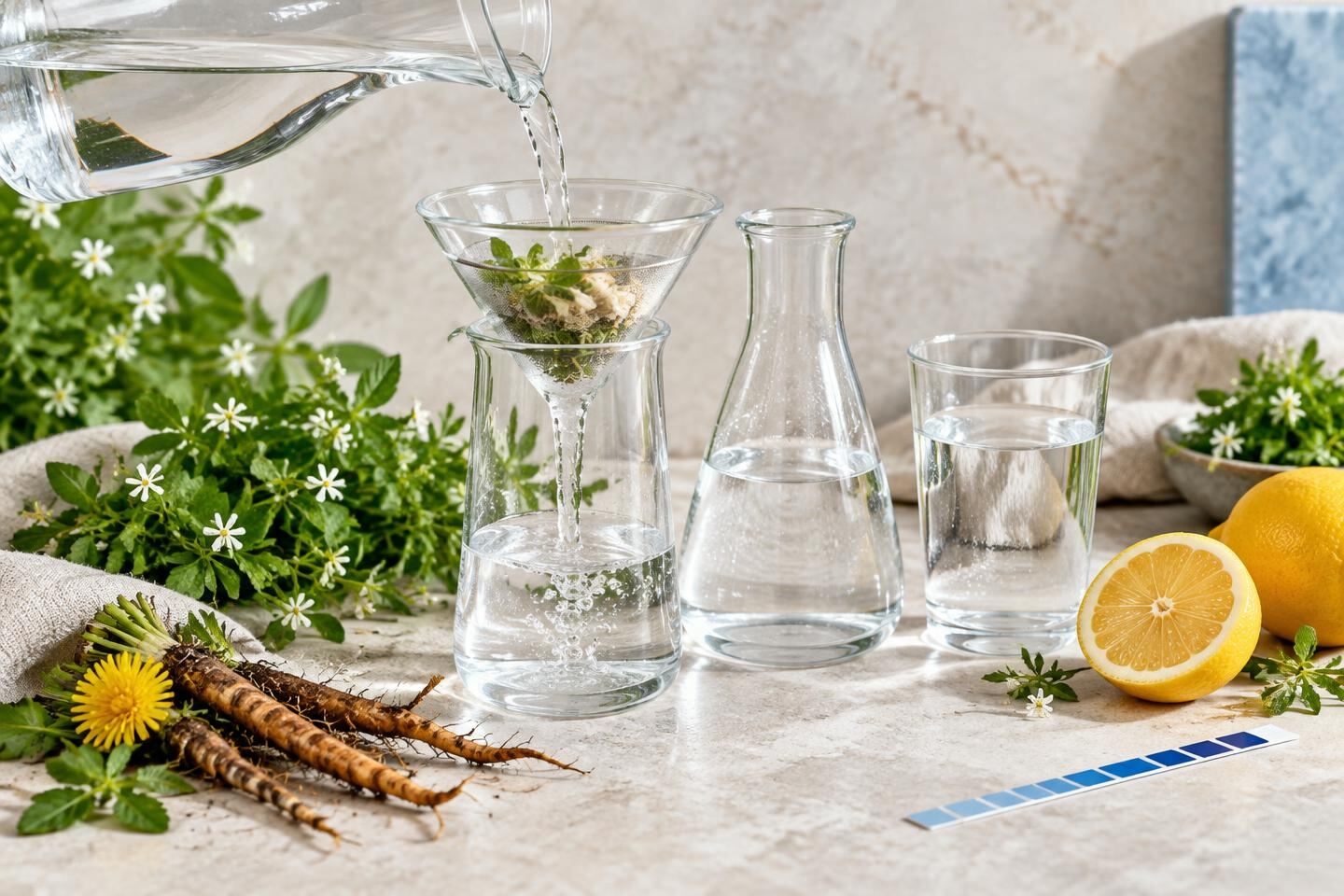
Drainage before detox means opening the routes out of the body — bowels, lymph, liver, kidneys, skin — for one to two weeks before starting any stronger cleanse. Mobilising material without an open exit is the main reason cleanses cause fatigue, headaches and rashes. Sequence first, intensity second.
Read the guide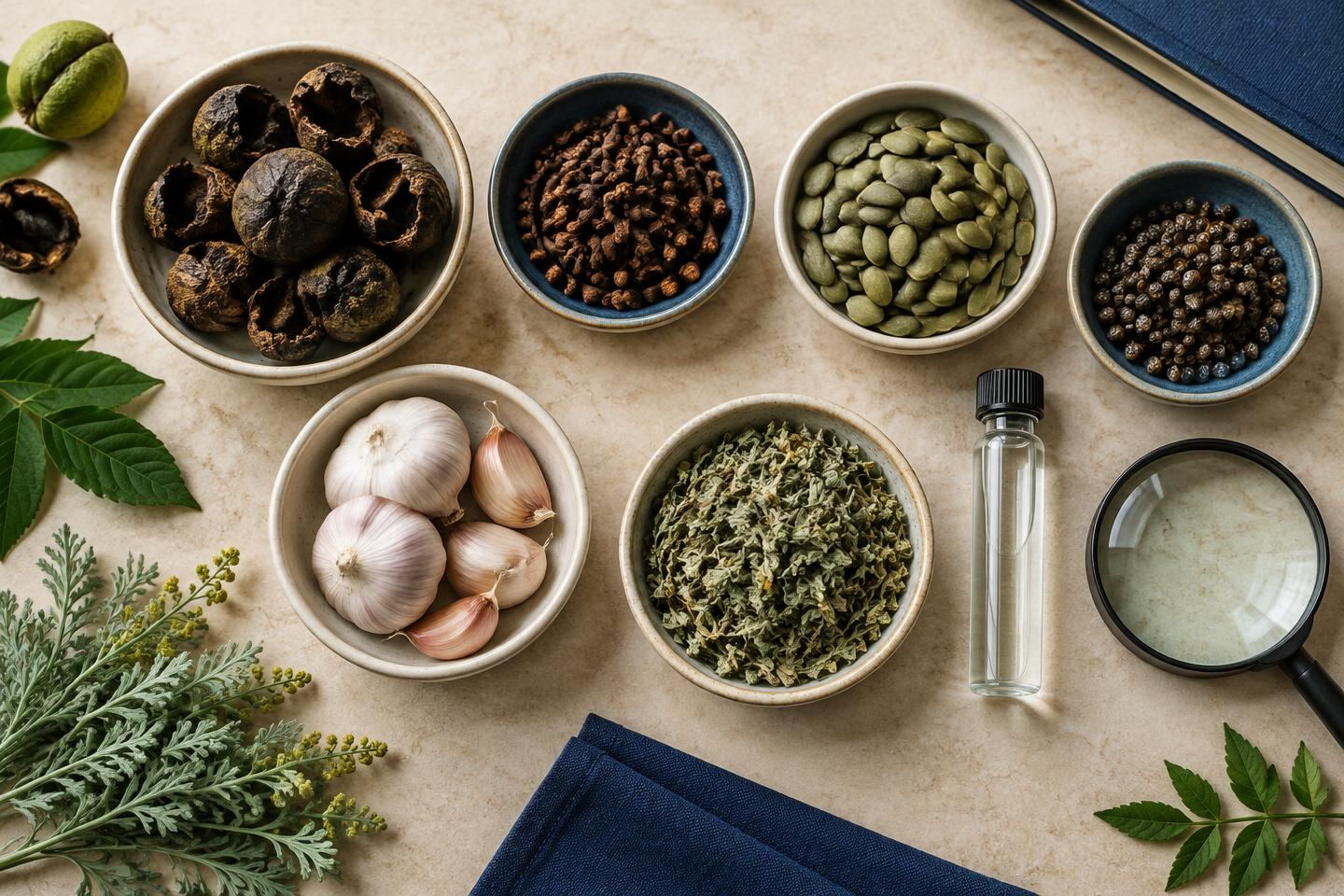
10 min read
Parasite cleanses, honestly: what they can and cannot do
A parasite cleanse is a time-boxed herbal protocol — typically nine to 30 days — intended to make the gut less hospitable while supporting bowel and liver clearance. Several traditional botanicals show laboratory activity against parasites, but no over-the-counter protocol can confirm or clear a diagnosed infection. That needs testing and often prescription treatment.
Read the guide
7 min read
Signs associated with a parasite burden — and what else explains them
Symptoms commonly associated with intestinal parasites include bloating, erratic stools, unexplained fatigue, waking between 1 and 3am, teeth grinding, skin irritation, sugar cravings and unexplained iron deficiency. Every one has other common explanations, so a stool PCR panel or gut mapping — not a symptom checklist — is how the question gets settled.
Read the guide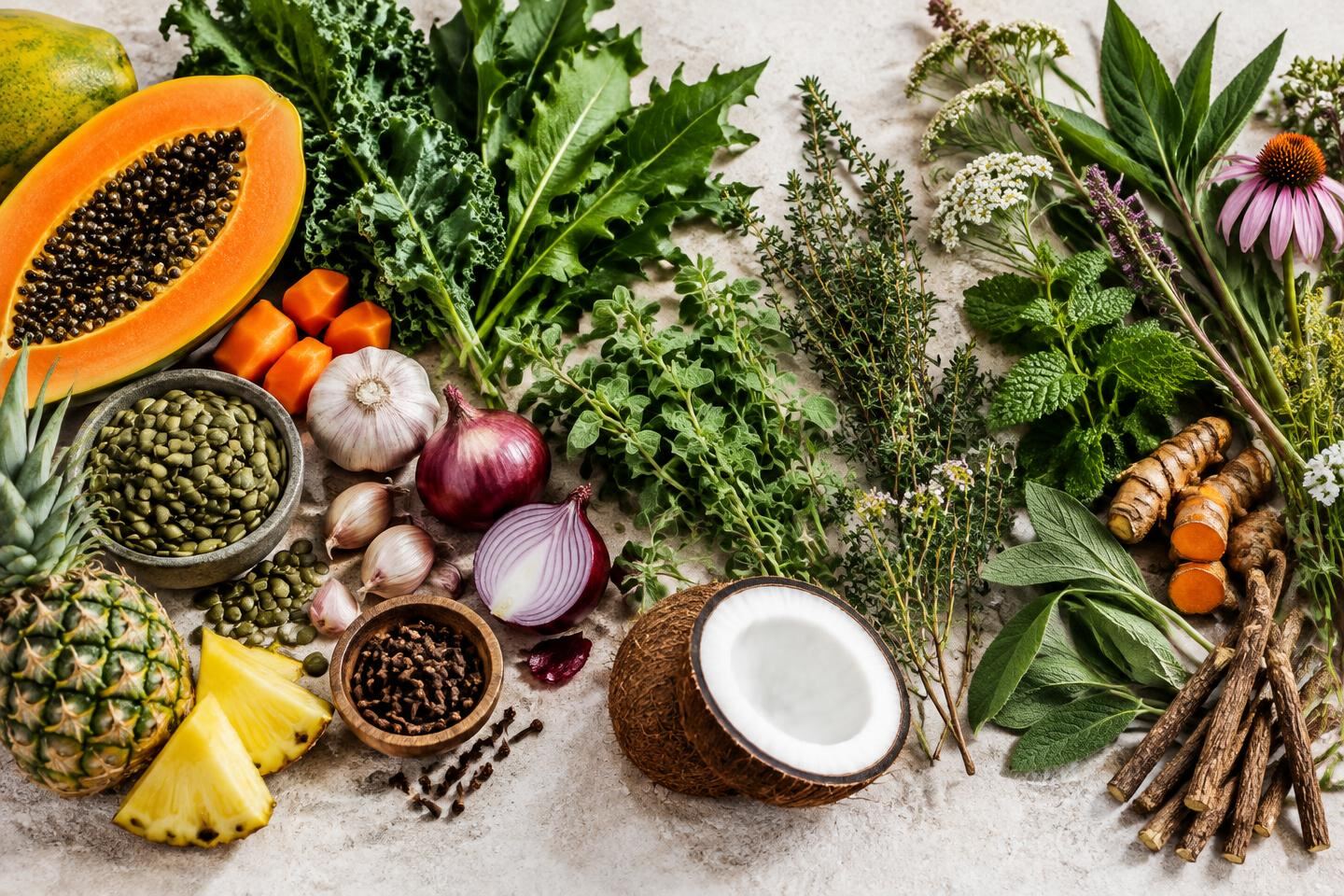
8 min read
Foods and herbs studied against parasites
Foods and botanicals with documented laboratory anti-parasitic activity include pumpkin seeds, papaya seeds, garlic, raw onion, clove, oregano, wormwood, black walnut hull, neem and pineapple bromelain. Laboratory activity is not the same as a clinical cure, so treat these as dietary and terrain support rather than as treatment for a diagnosed infection.
Read the guide
7 min read
Castor oil packs: how to do one and what to expect
A castor oil pack is a cloth soaked in castor oil, laid over the abdomen or liver area, covered and warmed for 30 to 60 minutes, two to four times a week. It is a traditional practice used to support circulation, lymphatic movement and parasympathetic relaxation. Avoid during pregnancy, over broken skin, or with a bleeding disorder.
Read the guide
7 min read
Herbs and habits for the lymphatic system
The lymphatic system has no pump, so it moves on muscle contraction, breathing and pressure change. Traditionally supportive herbs include cleavers, red root, calendula, echinacea root, burdock and ginger. Herbs help, but walking, deep breathing, hydration, dry brushing and castor oil packs do most of the work.
Read the guide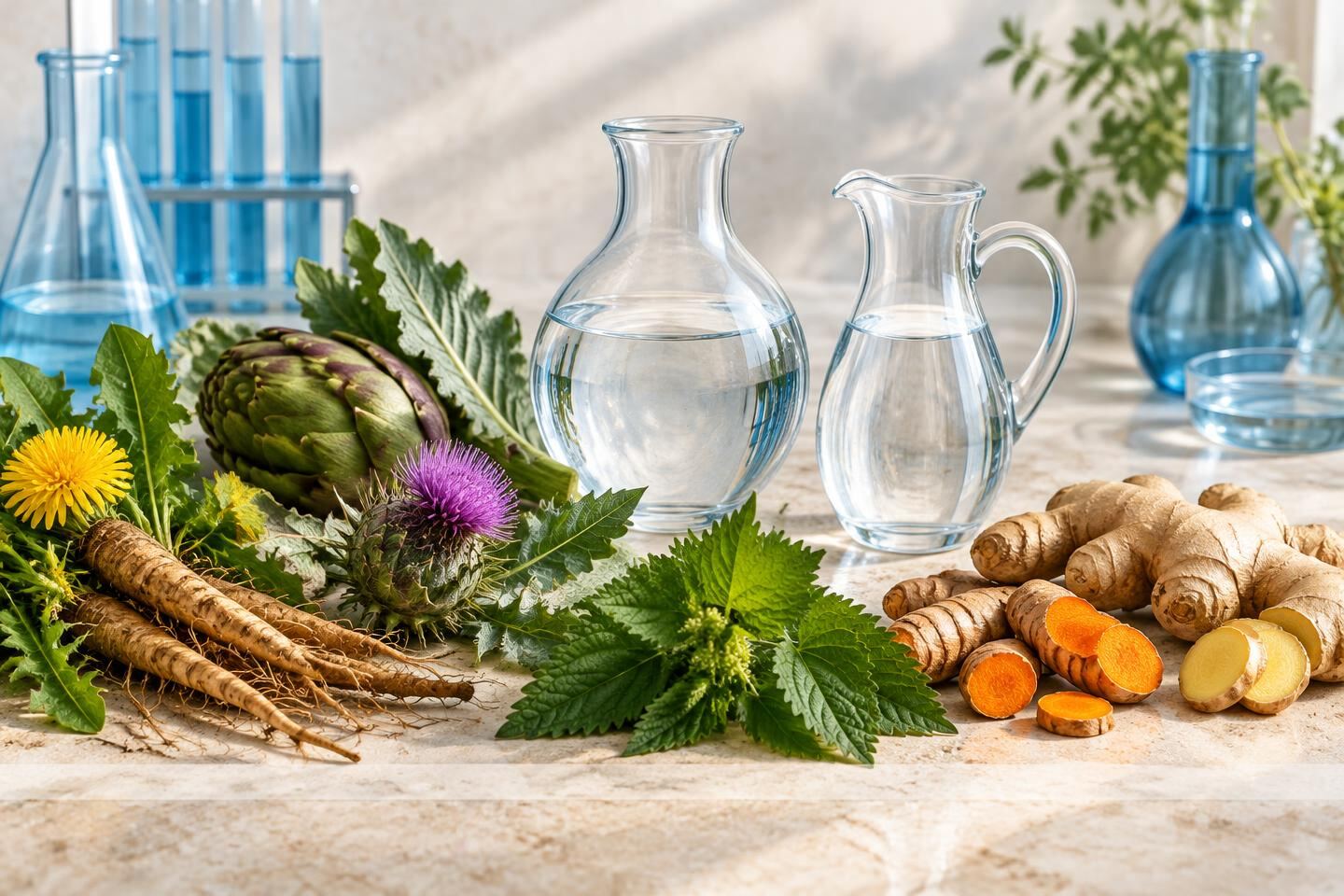
8 min read
Liver and kidney filtration: supporting the organs that do the quiet work
Your liver processes compounds in two phases and your kidneys filter roughly 180 litres of fluid daily. Bitter herbs such as dandelion root, milk thistle, burdock and artichoke leaf are traditionally used to support bile flow and filtration. No tea detoxifies an organ — support means reducing the load and supplying what the pathways need.
Read the guide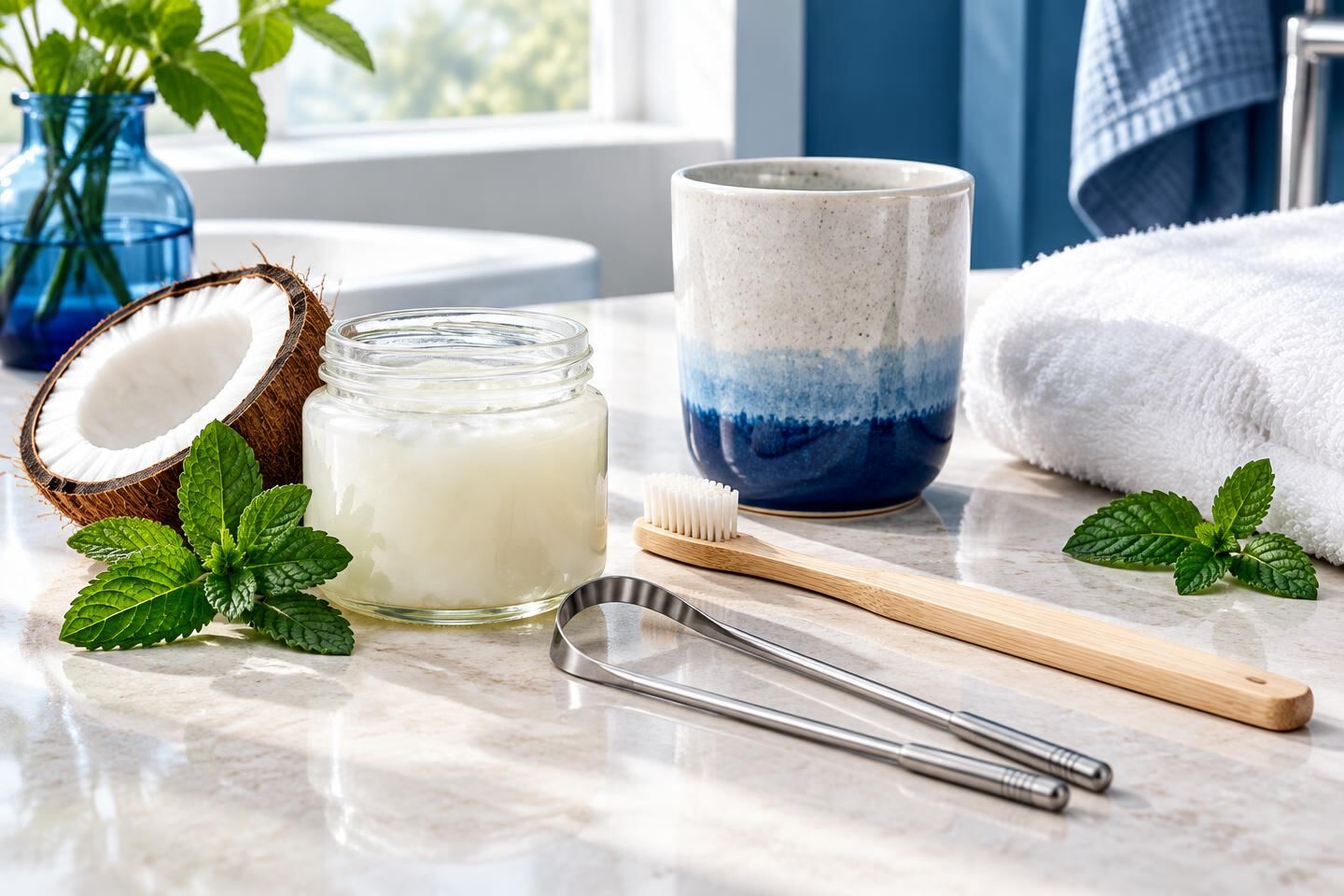
6 min read
Oil pulling and oral terrain: the cheapest high-return habit you have
Oil pulling means swishing about a teaspoon of oil for 10 to 15 minutes before eating, then spitting it into the bin — never the drain — and brushing afterwards. Studies suggest it can reduce oral bacterial load and improve breath. It supplements brushing, scraping and dental care; it never replaces them.
Read the guideShopping by category
If you already know what you are looking for, these pages compare the category honestly — including what to check on any label, not just ours.