Oil pulling and oral terrain: the cheapest high-return habit you have
6 min read · Updated September 21, 2026
The short answer
Oil pulling means swishing about a teaspoon of oil for 10 to 15 minutes before eating, then spitting it into the bin — never the drain — and brushing afterwards. Studies suggest it can reduce oral bacterial load and improve breath. It supplements brushing, scraping and dental care; it never replaces them.
Why the mouth belongs in a health protocol
The link between oral health and systemic inflammation is among the better-established connections in medicine. Periodontal disease is repeatedly associated with cardiovascular risk, poorer glycaemic control and inflammatory markers. Oral bacteria are swallowed continuously and do not stay politely in the mouth.
That makes the mouth the front door of the digestive tract, and it makes ten minutes of daily oral care one of the highest-return, lowest-cost habits available. It is also the place where most people are still using a plastic brush and a paste full of things they would not swallow, which is a strange gap in an otherwise careful routine.
How to oil pull properly
The method is simple and the two common mistakes are easily avoided.
- Do it first thing in the morning, before eating or drinking.
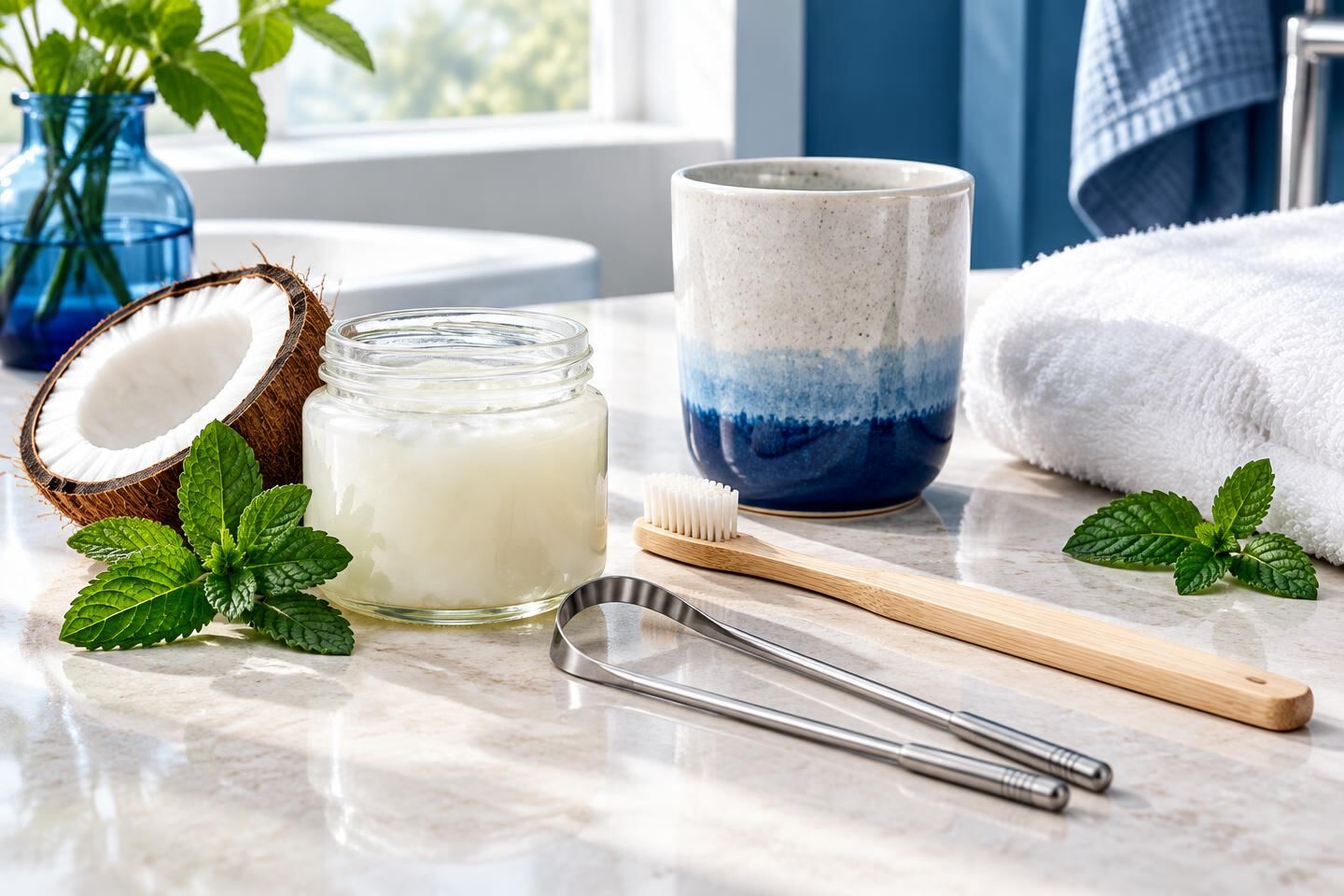
- Scrape the tongue two or three times, back to front, rinsing the scraper between passes.
- Take about a teaspoon of the blend and swish gently for 10 to 15 minutes. Gently — the jaw ache people complain about comes from vigorous swishing.
- Spit into a lined bin. Never the sink: the oil solidifies and blocks the drain, and it now carries what you pulled out.
- Rinse with warm water, then brush with an ultra-soft brush focused on the gum margin.
What it does and does not do
A number of small trials suggest oil pulling reduces plaque and oral bacterial load and improves breath, with some studies putting it broadly in the range of a conventional mouthwash. Most people who keep it up report fresher breath, a cleaner-feeling mouth, less morning coating and sharper taste within a week or two.
What it does not do is replace mechanical cleaning. Plaque is removed by a brush and floss, not by oil. It does not reverse cavities, cure gum disease, or substitute for dental care. If you have dental pain, visible decay or bleeding gums, see a dentist — and do the oil pulling alongside, not instead.
Mineral-rich oral care follows the same logic: it supports a saliva environment that favours the enamel surface rather than eroding it. That is maintenance of a condition, not repair of damage.
Consistency beats duration
A reliable eight minutes every morning outperforms an occasional twenty. Attach it to something you already do — showering, making coffee, getting dressed — and it becomes automatic within a fortnight.
Skip it if you have had recent oral surgery or extractions, and stop if swishing causes jaw pain. And if you have active decay or gum disease, book the dentist first.
This article is general wellness education. It is not medical advice, and the products discussed are not intended to diagnose, treat, cure or prevent any disease.
Before you start anything here
Read the safety guide, and have your provider review your medication list. Pregnancy, breastfeeding, kidney or liver disease, bleeding disorders and several medication classes all change what is appropriate.
Herbal use & safetyQuestions people ask about this
Measured, not guessed
How we know whether a routine is working
Most of this category asks you to judge a cleanse by how you felt on day four. We do it the other way round. Kure reads the systems these routines support before you start and again after you finish, so the answer comes from your own data instead of a testimonial.
Diagnostics describe patterns in your own data. They are not a diagnosis, and Kure Essentials products are not intended to diagnose, treat, cure or prevent any disease.
Who wrote this
Jocelyne · Herbalist, Kure Essentials family
Jocelyne formulates the herbal blends in the Kure Essentials family. Her work comes out of a family tradition of plant medicine, decades of hands-on practice with clients, and a hard line on sourcing: whole herb, no fillers, nothing she would not give her own family.
- Herbal formulation
- Traditional preparation
- Sourcing and testing
Reviewed by Kure Clinical Team
Our clinicians and health coaches review every Kure Essentials guide against the same standards we use inside patient care: what the evidence supports, what it does not, and what we would actually tell a patient sitting in front of us.
How Kure reviews contentThe matching sequence
Morning Ritual & Oral Terrain
The mouth is the front door of the digestive tract. Ten minutes every morning.
See the packageShop the shelf
Herbal Apothecary
Oils, salves, castor therapies and oral care for the routine around the tea.
Browse herbal apothecary